How to Achieve Your Emission Reduction Goals in Supply Chain?
In recent years, the urgency of setting and achieving emission reduction goals has become increasingly critical for supply chains worldwide. According to the World Economic Forum, supply chain emissions account for more than 80% of a company's total greenhouse gas emissions, highlighting the significant responsibility businesses hold. Companies that prioritize these goals not only contribute to global sustainability but also enhance their market competitiveness.
Implementing effective strategies is essential. A 2021 report by CDP found that companies with robust emission reduction initiatives can reduce costs by up to 30%. However, many organizations face obstacles in tracking and managing their emissions accurately. Issues such as inconsistent data and lack of transparency complicate the path to success.
Recognizing these challenges allows companies to reflect on their practices. It emphasizes the need for integrated solutions that facilitate better monitoring, collaboration, and reporting. Achieving emission reduction goals requires commitment and adaptability. As the landscape evolves, continuous improvement in strategies and engagement with stakeholders is vital for meaningful progress.

Understanding Emission Reduction Goals in Supply Chains
Emission reduction goals in supply chains are essential for sustainability. Companies need to grasp what these goals entail. They aim to minimize greenhouse gas emissions across all supply chain activities.
Understanding your current emissions is the first step. Conduct a thorough audit to identify key areas contributing to emissions.
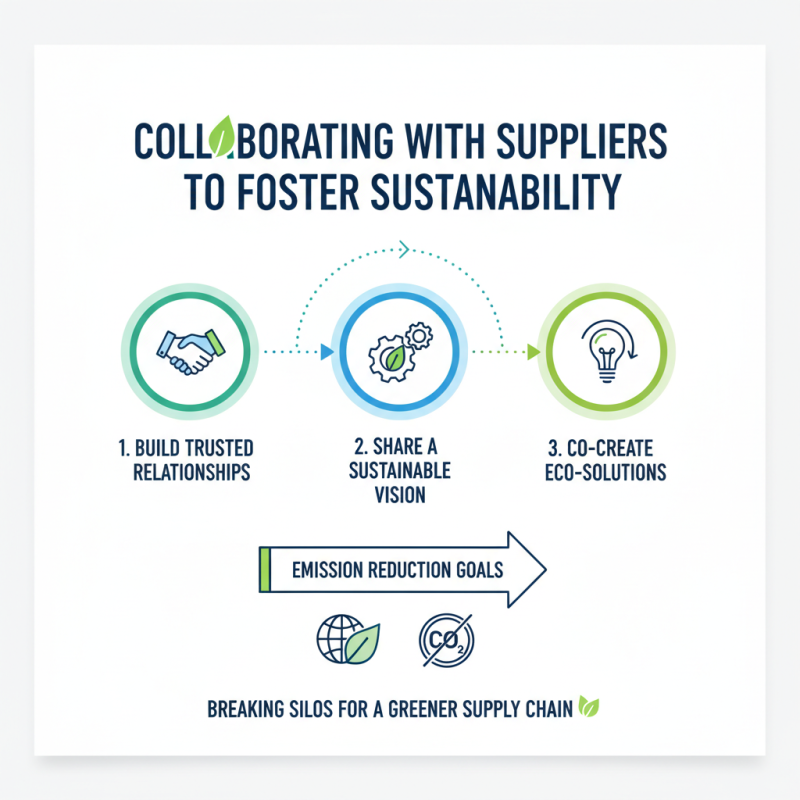
One effective approach is to collaborate with suppliers. Encourage them to adopt greener practices. This creates a ripple effect, promoting environmental responsibility throughout the supply chain. Shared goals can lead to innovative solutions. For example, joint investments in energy-efficient technologies can reduce overall emissions significantly.
Tips: Set specific, measurable targets. This makes it easier to track progress and hold parties accountable. Regularly review and adjust strategies based on performance. Building transparency in your supply chain is key. Use technology to monitor emissions data continuously. This helps identify issues before they become problematic. Stay open to feedback and be willing to adapt your approaches over time.
Identifying Key Emission Sources in Your Supply Chain
Identifying key emission sources in your supply chain is crucial for achieving your emission reduction goals. Every supply chain has unique challenges. Emissions can vary significantly based on materials, transportation modes, and production processes. Understanding these sources can set a strong foundation for effective reduction strategies.
Start by mapping your supply chain. Look closely at each stage, from raw material extraction to product delivery. Conduct interviews with key stakeholders and gather data on energy usage and waste production. This approach helps reveal hidden emissions. Supply chain emissions are complex. Many companies overlook indirect sources, such as upstream suppliers and logistics partners.
Focus on the most carbon-intensive areas first. It’s essential to track and measure emissions accurately. Companies often rely on estimates, which may lead to incorrect prioritization. Regular audits can enhance your understanding. Encourage collaboration with suppliers. Identify opportunities for joint improvements. Addressing emissions requires collective effort and transparency.
Developing Strategies for Effective Emission Reduction
Achieving emission reduction goals in the supply chain requires well-developed strategies. The 2022 Global Logistics Emissions Council report reveals that the logistics sector is responsible for approximately 15% of global greenhouse gas emissions. This stark number highlights the urgency for effective solutions.
A practical tip is to analyze and digitize your supply chain processes. Use data analytics to identify emission hotspots. Companies harnessing real-time data have reported emission reductions of up to 30%. Investing in technology can provide insights that drive more sustainable decisions. Transparency in the supply chain helps build trust, but it also points to areas needing improvement.
Collaboration with suppliers is crucial. Forming partnerships can lead to shared best practices. According to a recent study, 70% of organizations that collaborate with suppliers see increased efficiency. However, remember that not all suppliers have the same sustainability commitment. Regular assessments can help mitigate risks and encourage progress. Change takes time, but it’s essential for long-term success.
Consider the environmental impact of transportation modes. For instance, shifting from road to rail can reduce emissions significantly. Continuous learning and adaptation are necessary, as new data emerges frequently. Embrace challenges as opportunities for growth within your supply chain.
Measuring and Monitoring Progress Towards Emission Goals
Measuring and monitoring progress toward emission reduction goals in the supply chain is critical. Companies often grapple with setting precise targets. Quantifiable metrics offer clarity. Tracking carbon footprints over time can provide valuable insights.
Utilizing software tools can enhance visibility into emission sources. Detailed audits help identify major contributors. Regular assessments reveal trends. It’s not always straightforward. Many organizations face challenges in collecting accurate data. These inconsistencies can hinder progress.
Maintaining awareness of industry standards is essential. Establishing benchmarks helps in measuring success. However, reflecting on past methodologies is necessary. Their effectiveness may diminish over time. Revising strategies periodically ensures relevance and accuracy. Being adaptable can make a significant difference.
 Skip to content