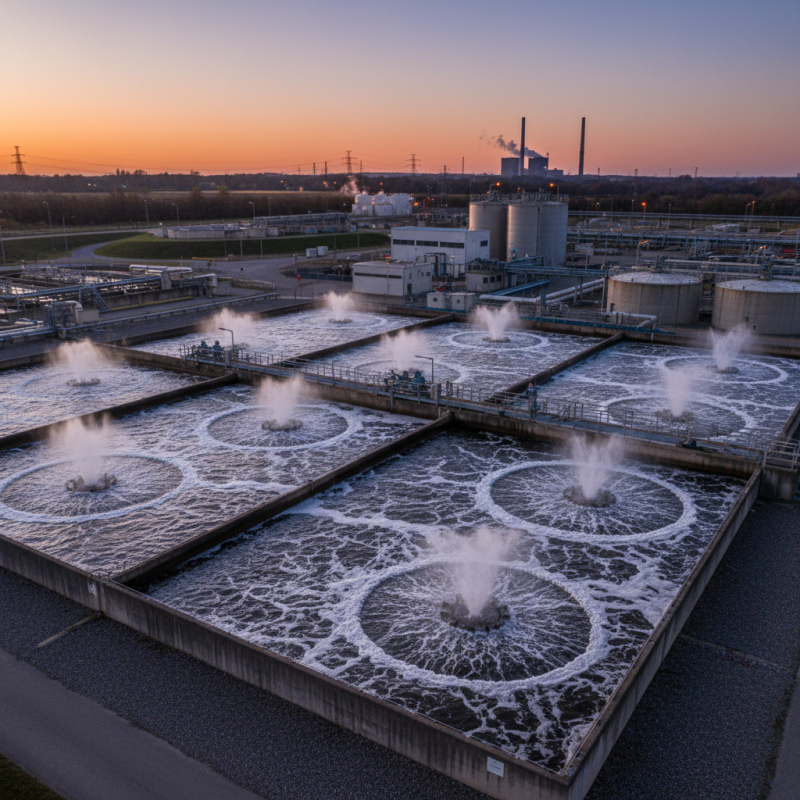
What is the Aeration Process in Wastewater Treatment?
The Aeration Process In Wastewater Treatment is a crucial step in enhancing water quality. This process promotes biological decomposition of organic materials found in wastewater. By introducing oxygen, it encourages beneficial microorganisms to thrive. These microorganisms break down pollutants, thus reducing environmental impact.
Effective aeration can vary in methods and technologies. Common techniques include surface aerators and diffused aeration systems. Each method has its benefits and limitations. For example, some systems may induce excessive turbulence, which can lead to energy inefficiency.
The Aeration Process in Wastewater Treatment is not without challenges. Operators must balance cost, efficiency, and effectiveness. Continuous monitoring is essential to optimize performance. Overall, understanding this process is vital for effective wastewater management.
Definition of Aeration in Wastewater Treatment
Aeration is a crucial process in wastewater treatment. It involves introducing air into the wastewater to promote biological degradation of organic matter. During this process, aerobic microorganisms digest pollutants. This action significantly reduces biochemical oxygen demand (BOD), making water safer for discharge or further treatment. According to the U.S. Environmental Protection Agency (EPA), proper aeration can lower BOD levels by up to 90%.
The effectiveness of aeration depends on several factors, including oxygen transfer rate and retention time. These metrics help determine how well oxygen is supplied to microbes. Research suggests that insufficient oxygen levels can lead to incomplete degradation of organic waste. Interestingly, studies indicate that around 30% of wastewater treatment plants experience challenges related to inadequate aeration. This issue can hinder treatment efficiency, leading to environmental concerns.
In essence, while aeration is foundational for successful wastewater treatment, it is complex. Balancing required oxygen levels and proper timing is essential. Continuous monitoring and adjustment are necessary, as conditions change. This dynamic nature of aeration highlights the need for ongoing training and expertise in wastewater management practices.
What is the Aeration Process in Wastewater Treatment?
| Parameter | Description | Importance in Aeration |
| Dissolved Oxygen (DO) | The amount of oxygen dissolved in water, critical for aerobic bacteria. | Essential for the breakdown of organic matter in wastewater. |
| Aeration Rate | The volume of air supplied to the wastewater over a certain time. | Determines the efficiency of the aeration process. |
| Mixed Liquor Suspended Solids (MLSS) | The concentration of suspended solids in the mixed liquor during aeration. | Indicates the amount of microorganisms available for treatment. |
| Hydraulic Retention Time (HRT) | The average time that wastewater remains in the aeration tank. | Influences the effectiveness of the treatment process. |
| Temperature | The degree of warmth of the wastewater, impacting microbial activity. | Affects the solubility of oxygen and the rate of biological processes. |
| pH Level | A measure of the acidity or alkalinity of the wastewater. | Influences microbial health and nutrient availability. |
Importance of Aeration in the Treatment Process
Aeration is a crucial step in wastewater treatment. It enhances the removal of pollutants through biological processes. By introducing air into water, we facilitate the growth of microorganisms. These tiny organisms break down organic matter, improving water quality.
The aeration process significantly boosts the efficiency of treatment plants. Proper oxygen levels encourage microbial activity, leading to faster decomposition of waste. If aeration is insufficient, some pollutants may remain untreated. This can lead to environmental issues, such as water pollution.
Tips for effective aeration include:
- Monitoring oxygen levels regularly.
- Ensuring that the aeration tanks are properly maintained.
- Recognizing that different wastewater types require varying aeration techniques.
- Making adjustments based on specific treatment goals.
Always prioritize the well-being of the ecosystem.
Balancing treatment and environmental health is vital for sustainable practices.
Types of Aeration Methods Used in Wastewater Treatment
Aeration is crucial in wastewater treatment. It enhances the removal of organic pollutants and improves water quality. Various methods cater to different needs and processes.
One common method is surface aeration. It involves stirring water at the surface, increasing oxygen absorption. This method is cost-effective. However, it can lead to odors.
Another method is diffusion. This deep aeration introduces air at various depths. Bubble generators create small bubbles, maximizing oxygen contact. This technique is efficient but requires a careful setup.
Tips: Ensure regular maintenance of aeration systems. Poorly maintained equipment may reduce effectiveness. Monitor oxygen levels for optimal results. Adjust methods based on water characteristics for better performance.
Lastly, mechanical aeration employs mixers and blades. It ensures thorough mixing of wastewater. This method may be expensive but increases treatment reliability. Evaluate costs against environmental benefits. Be mindful of energy consumption; sustainable practices are essential.
Mechanisms of Aeration and Their Impact on Water Quality
Aeration is a crucial step in wastewater treatment. This process enhances the decomposition of organic materials by introducing oxygen into the water. Various mechanisms of aeration exist, each impacting water quality differently. For instance, surface aerators mix air into the water, which facilitates a higher transfer rate of oxygen. Reports indicate that surface aerators can increase dissolved oxygen levels by 2-4 mg/L, improving the aerobic digestion of waste.
Diffused aeration methods, on the other hand, utilize fine bubbles to achieve similar results. These bubbles disperse oxygen efficiently, raising the saturation levels beyond typical values. Studies show that diffused aeration systems can boost oxygen transfer efficiency by up to 30%. However, improper maintenance can lead to clogging and reduced efficiency, presenting ongoing challenges in operational management.
The impact of aeration on water quality is profound. Increased oxygen levels promote healthier microbial activity, which is essential for breaking down contaminants. Yet, the relationship between aeration and other factors like temperature and pH can complicate outcomes. Balancing these variables is crucial for optimizing treatment processes and achieving the desired water quality standards.
Factors Influencing Aeration Efficiency in Treatment Systems
Aeration plays a critical role in wastewater treatment. It enhances the breakdown of organic materials, which is vital for effective purification. However, several factors influence aeration efficiency within treatment systems. Understanding these aspects can lead to improved operational performance and resource management.
One significant factor is the design of the aeration system. Systems must balance energy consumption and oxygen transfer rates. According to a study by the Water Environment Federation, optimizing these parameters can increase a facility’s treatment capacity by up to 30%. Additionally, the depth of water in aeration tanks can affect gas exchange rates. Deeper tanks may lead to inefficient oxygen diffusion, requiring more energy.
Tips: Regularly monitor system performance. Adjust aeration rates based on real-time data. Maintenance of aeration equipment is crucial. Blocked diffusers can lead to significant drops in oxygen levels.
Another influencing factor is the temperature of the wastewater. Warm water holds less dissolved oxygen, which can hinder effective treatment. Studies show that aeration efficiency declines by about 2% for each degree Celsius increase in temperature. Understanding this can lead to better management of seasonal variations in treatment processes.
Regularly reviewing these factors can uncover opportunities for enhancement. Engaging with data-driven methods adds value to aeration processes. Such steps can improve the overall sustainability of wastewater treatment systems.
 Skip to content