Top Strategies for Achieving Emission Reduction Goals in the Climate Crisis?
As the climate crisis intensifies, achieving emission reduction goals becomes increasingly urgent. According to the International Energy Agency (IEA), global CO2 emissions from energy use reached a staggering 36.4 billion tons in 2022. This alarming figure highlights the need for robust strategies to combat climate change. Many countries have set ambitious targets. However, progress remains uneven and slow.
The World Resources Institute notes that reaching these emission reduction goals often encounters significant challenges. Transitioning to renewable energy sources takes time and investment. Moreover, industrial sectors continue to rely heavily on fossil fuels. Data from the UN Intergovernmental Panel on Climate Change indicates that emissions must be halved by 2030 to limit global warming to 1.5 degrees Celsius. This requires not only bold actions but also innovative and adaptable approaches.
While many organizations tout their sustainability efforts, a gap exists between intent and action. Companies must reflect on their strategies to identify areas for improvement. The journey to effective emission reduction is filled with complexities and requires ongoing commitment and accountability. The stakes are high, and the path forward demands both urgency and a willingness to rethink conventional practices.

Top Strategies for Achieving Emission Reduction Goals in the Climate Crisis
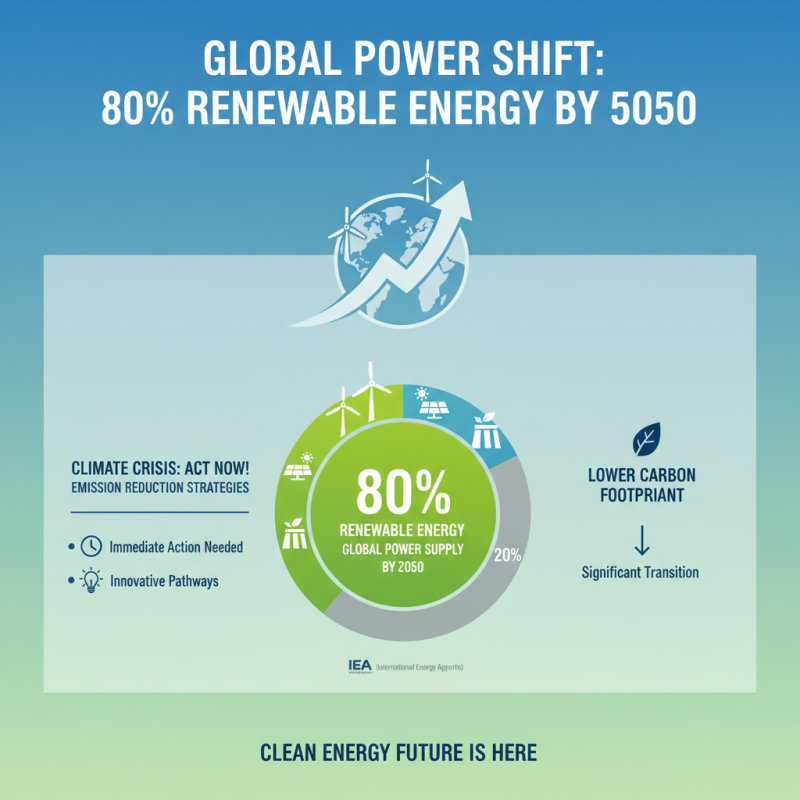
The climate crisis demands immediate action and effective strategies for emission reduction. Governments and organizations are exploring innovative pathways. For instance, the International Energy Agency (IEA) reports that renewable energy could make up 80% of global power supply by 2050. This transition can significantly lower carbon footprints.
Energy efficiency remains a crucial strategy. The U.S. Department of Energy indicates that improvements in energy efficiency could reduce energy consumption by up to 50% in key sectors. Implementing smart technologies can help achieve these savings. Yet, many businesses still lag in adopting such technologies. Transitioning requires substantial investment and risk-taking, which can deter some from moving forward.
Carbon pricing is another tool. A report from the World Bank suggests that 23% of global emissions are now covered by carbon pricing. However, not all regions participate equally. There are disparities in implementation, leading to an uneven reduction landscape. These gaps reveal the complexities of achieving global cooperation and highlight areas needing more focus. Addressing these challenges is essential for meeting ambitious climate goals.
Understanding Global Emission Trends: Key Data and Benchmarks for Action
Global emission trends reveal a pressing challenge. Data shows that CO2 levels have reached alarming heights. In 2022, global emissions hit a record of 36.4 billion tons. This figure serves as a benchmark for urgent action. Nations need to respond swiftly. Each country carries a unique responsibility for emission levels.
Analyzing these trends uncovers inconsistencies. Some countries show progress, while others lag significantly. Renewable energy adoption is rising, yet fossil fuel dependency persists. The differences highlight areas needing reflection. Investments in clean technology are crucial, but not all have made equal strides. Local initiatives can complement global efforts. Community involvement is often overlooked but can drive significant changes.
Setting achievable targets is vital. Goals need to be realistic and time-bound. Many strategies fail due to vague benchmarks. Regular assessments can create accountability. Transparency in reporting emissions can encourage responsibility. Overall, understanding the data is key to informed decision-making.
Sector-Specific Approaches: Prioritizing Heavy Emitters for Maximum Impact
In the fight against climate change, targeting heavy emitters is critical. Industries such as energy, transportation, and agriculture play significant roles in greenhouse gas emissions. Focusing on these sectors can yield the largest reductions in emissions. For instance, transitioning to cleaner energy sources can significantly lower pollution levels. Yet, such shifts are complex and require careful planning.
Heavy emitters need tailored strategies. In the transportation sector, electric vehicles offer a promising path forward. However, the infrastructure for charging must expand rapidly to support this transition. Similarly, in agriculture, adopting sustainable practices can minimize emissions. But, many farmers struggle with costs and knowledge gaps. Actions must not only be effective but also equitable, ensuring all stakeholders can contribute.
Change can feel overwhelming. Some sectors may resist due to financial pressures. Others may lack clear paths to reduce emissions. It’s essential to address these challenges with innovative solutions. Collaboration among governments, industries, and communities can drive progress. Perhaps we need to rethink our approach entirely. Incremental changes may not suffice. More substantial, systemic shifts could encourage meaningful results.
Top Strategies for Achieving Emission Reduction Goals in the Climate Crisis - Sector-Specific Approaches: Prioritizing Heavy Emitters for Maximum Impact
| Sector |
Total Emissions (Metric Tons CO2e) |
Reduction Goal (%) |
Strategies for Reduction |
Timeline for Implementation |
| Energy |
10,000,000 |
50% |
Transition to renewable sources, energy efficiency improvements |
2025 |
| Transportation |
7,500,000 |
40% |
Increase public transport usage, electric vehicle incentives |
2030 |
| Industry |
8,000,000 |
30% |
Adopt cleaner technologies, waste reduction strategies |
2027 |
| Agriculture |
5,000,000 |
25% |
Improve livestock management, optimize fertilizer use |
2028 |
| Waste Management |
3,000,000 |
35% |
Reduce landfill use, increase recycling rates |
2026 |
Innovative Technologies: Leveraging Renewable Energy and Carbon Capture Solutions
Innovative technologies are essential in the fight against climate change. Renewable energy sources, such as solar and wind, are becoming increasingly viable. Reports indicate that these technologies could reduce carbon emissions by up to 70% globally by 2050. That’s a significant number. Yet, challenges remain in storage and distribution. Advanced battery technologies are crucial to overcoming these hurdles.
Carbon capture solutions also play a pivotal role. These technologies can capture up to 90% of carbon dioxide emissions from the atmosphere. A study from the International Energy Agency shows that widespread adoption could prevent 4 billion metric tons of CO2 emissions annually. However, deployment rates are stagnating due to costs and infrastructure limitations.
Tip: Investing in research and development for these technologies is vital. Collaboration across sectors can accelerate progress. Engage with local governments to facilitate supportive policies. Another tip is to promote public awareness to drive demand for clean energy solutions. Stakeholder involvement can push innovative projects forward for better results. Embracing these strategies is not just an option but a necessity. The clock is ticking in this climate crisis.
Policy Frameworks: Establishing Regulations and Incentives for Green Transition
Establishing regulations and incentives is vital for a green transition. Governments must create robust policy frameworks. These frameworks can promote renewable energy adoption and reduce carbon footprints effectively. For instance, a carbon tax could encourage companies to lower emissions. It forces businesses to rethink their practices.
Incentives, like subsidies for solar panels, promote eco-friendly choices. Communities might receive funding for tree planting projects, improving air quality. However, many policies lack enforceability. Some companies may evade regulations, leading to insufficient impact. Policymakers must ensure accountability within these frameworks.
Public awareness campaigns can boost support for existing regulations. Engaging citizens helps foster a culture of sustainability. People should understand their role in the climate crisis. Yet, many remain indifferent or unaware. It’s essential to bridge this gap in understanding. Making policies transparent can motivate more citizens to participate. Change often starts at the grassroots level, prompting bigger shifts in society.
Conclusion
The article "Top Strategies for Achieving Emission Reduction Goals in the Climate Crisis" outlines essential approaches to effectively meet emission reduction goals amid ongoing environmental challenges. It begins by analyzing global emission trends, providing critical data and benchmarks that inform targeted actions. By focusing on sector-specific strategies, the article emphasizes the importance of prioritizing heavy emitters, enabling maximum impact on reducing overall emissions.
Furthermore, the article highlights the role of innovative technologies, such as renewable energy sources and carbon capture solutions, in advancing these goals. Establishing robust policy frameworks is also crucial, as regulations and incentives drive the green transition necessary for sustainable practices. Lastly, the piece underscores the significance of public engagement, advocating for community mobilization to ensure ongoing commitment to emission reduction goals, fostering a collective effort toward a more sustainable future.
 Skip to content