What Are Manufacturing Emissions and Why Do They Matter?

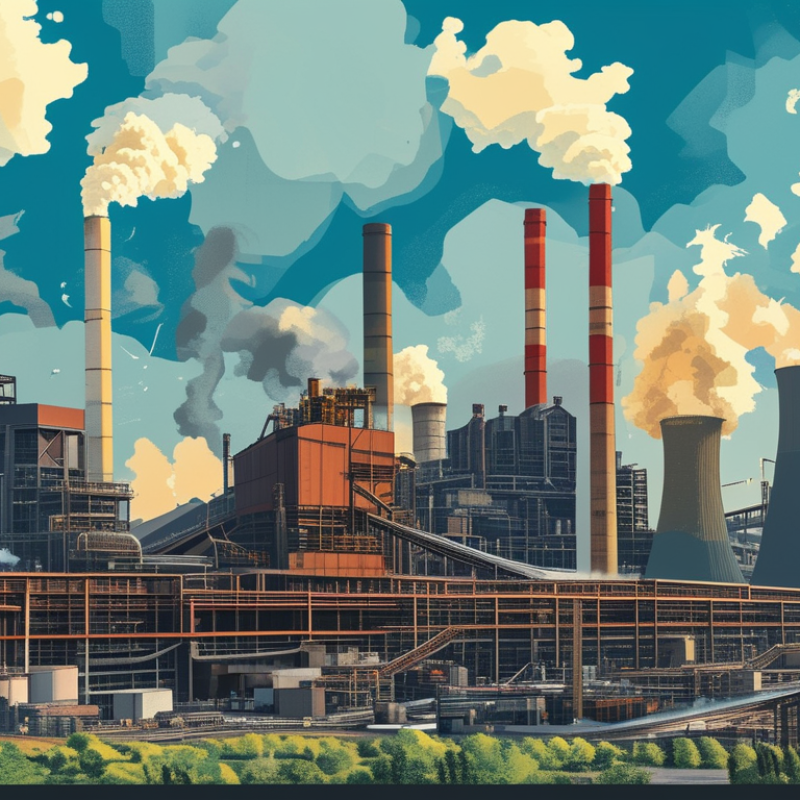
Manufacturing emissions are the gases and particles released while factories make products, generate heat, and move materials. They can come from fuel burned in furnaces, electricity purchased from the grid, chemical reactions, and leaking refrigerants. A steel mill, for example, may release carbon dioxide beside a glowing furnace, while a food plant may use energy for refrigeration, cleaning, and packaging.

These emissions matter because they influence climate change, air quality, worker health, and community well-being. They also reveal how efficiently a company uses energy and raw materials. Reliable assessment usually separates direct emissions from factory operations, indirect emissions from purchased electricity, and wider supply-chain impacts. This structure helps managers identify practical improvements, such as replacing outdated boilers, reducing production waste, or sourcing lower-carbon electricity.

Measurement is not always simple. Data can be incomplete, suppliers may use different methods, and reported figures can hide important assumptions. The picture is not always complete. Responsible analysis should therefore explain boundaries, calculation methods, and uncertainties rather than present one number as absolute truth. Standards and third-party verification can improve confidence, but they cannot replace careful judgment.

Understanding manufacturing emissions requires more than counting smokestacks. It means examining energy bills, production volumes, equipment conditions, material choices, and local impacts together. This article explores what these emissions include, why they matter, and how businesses can reduce them without relying on vague promises. Progress may be uneven. Still, transparent measurement creates a stronger basis for cleaner, more accountable manufacturing.
What Are Manufacturing Emissions and Why Do They Matter?

Defining Manufacturing Emissions and Their Main Sources

What Are Manufacturing Emissions and Why Do They Matter?

Defining Manufacturing Emissions and Their Main Sources

Manufacturing emissions are greenhouse gases released while making, moving, and using industrial products. They include carbon dioxide, methane, and nitrous oxide. The GHG Protocol divides them into three scopes. Scope 1 covers fuel burned onsite and chemical reactions. Scope 2 covers purchased electricity, steam, heating, and cooling. Scope 3 includes suppliers, transport, product use, and disposal.

The sources are practical and visible. A furnace burns natural gas. A kiln chemically transforms limestone. A factory draws electricity from a carbon-intensive grid. Refrigerant leaks may add smaller, but potent, emissions. Steel, cement, chemicals, and food processing often have different emission profiles. The International Energy Agency reported that industry produced about 9 gigatonnes of direct CO2 emissions in 2022, nearly one-quarter of global energy-system emissions. Cement alone contributes roughly 7% of global CO2 emissions, according to the International Energy Agency.

Measurement is not always clean. A factory may report lower onsite emissions while outsourcing electricity-intensive production. The numbers can look better than reality. The IPCC emphasizes that reliable inventories need consistent boundaries, verified activity data, and transparent calculation methods. In practice, teams inspect fuel meters, electricity bills, production volumes, and supplier records. Small gaps matter. One missing process stream can distort a yearly footprint. Manufacturing emissions are therefore both an engineering issue and an accounting issue, with decisions shaped by what companies choose to measure.
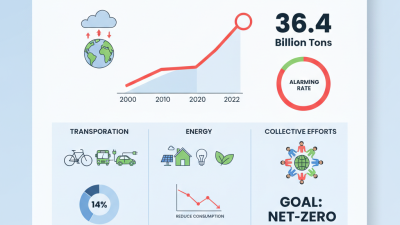
How Industrial Processes Produce Greenhouse Gases and Other Pollutants

What Are Manufacturing Emissions and Why Do They Matter?

How Industrial Processes Produce Greenhouse Gases and Other Pollutants

Manufacturing emissions are gases and particles released while factories turn raw materials into products. They come from fuel combustion, chemical reactions, material handling, and waste treatment. A gas-fired furnace sends carbon dioxide up a stack. Some processes also release methane or nitrous oxide, which have higher warming potential over selected time periods. Electricity adds indirect emissions when power generation relies on fossil fuels. The source is not always obvious.

Industrial pollution extends beyond greenhouse gases. High-temperature furnaces can form nitrogen oxides, while sulfur in fuel or feedstock may produce sulfur dioxide. Cutting, grinding, and crushing can lift fine particulate matter into indoor and outdoor air. Solvents and coatings may emit volatile organic compounds. Wastewater can carry oils, metals, salts, or organic matter into treatment systems. Small leaks matter. A loose valve may release vapors continuously, even when production appears normal.

Reliable assessment begins with measured fuel use, production volumes, stack testing, and equipment inspections. Engineers often compare emissions per tonne of product, not just total annual output. That distinction matters when a factory grows but improves efficiency. Controls may include heat recovery, cleaner energy, enclosed material transfer, filtration, and leak detection. Yet calculations remain imperfect. Missing data, changing raw materials, and poorly maintained sensors can distort results. A credible report should show its methods, uncertainties, and monitoring dates. It should also examine worker exposure, nearby communities, and the full process rather than one convenient exhaust pipe.

What Are Manufacturing Emissions and Why Do They Matter? — How Industrial Processes Produce Greenhouse Gases and Other Pollutants
Manufacturing Activity Primary Emission Source Main Greenhouse Gas or Pollutant Representative Real-World Metric Why It Matters Reference Basis
Cement and clinker production Calcination of limestone and high-temperature kiln fuel combustion Carbon dioxide (CO₂), nitrogen oxides (NOₓ), sulfur oxides (SOₓ), and particulate matter (PM) Approximately 0.5–0.6 tonnes of process CO₂ are released per tonne of clinker, before additional fuel-related emissions. Calcination releases CO₂ from the chemical conversion of limestone, so process emissions remain even when fossil-fuel use is reduced. International Energy Agency (IEA) cement-sector assessments; Intergovernmental Panel on Climate Change (IPCC) industrial process methods
Iron and steel production Coal-based reduction of iron ore and fuel use in blast furnaces, direct-reduction units, and furnaces CO₂, CO, NOₓ, SOₓ, PM, and volatile organic compounds (VOCs) The global average emissions intensity is approximately 1.8 tonnes of CO₂ per tonne of crude steel. Steelmaking is energy-intensive, and coal used as both a fuel and chemical reducing agent produces substantial direct emissions. IEA, “Iron and Steel Technology Roadmap” and related sector analysis
Ammonia production Hydrogen production from natural gas or coal and heat required for ammonia synthesis CO₂, methane (CH₄), and nitrous oxide (N₂O) Conventional ammonia production emits roughly 2.4 tonnes of CO₂ per tonne of ammonia on average. Ammonia is essential for fertilizer production, but its hydrogen supply can create significant emissions before the product reaches farms. IEA, “Ammonia Technology Roadmap”
Primary aluminum production Electricity-intensive electrolysis and carbon-anode consumption CO₂, perfluorocarbons (PFCs), fluoride compounds, and PM Global average primary aluminum emissions are approximately 16.6 tonnes of CO₂-equivalent per tonne of aluminum, depending on electricity sources and technology. Electricity generation often dominates the lifecycle footprint, while anode effects can produce highly potent PFC gases. IEA aluminum-sector analysis; IPCC greenhouse-gas inventory guidance
Industrial natural-gas combustion Boilers, furnaces, dryers, and combined heat-and-power equipment CO₂, NOₓ, CO, and small quantities of methane Approximately 53.06 kg of CO₂ are emitted per million British thermal units (MMBtu) of natural gas combusted. Combustion emissions scale directly with fuel consumption and can affect both climate change and local air quality. U.S. Environmental Protection Agency (EPA), emission factors for greenhouse-gas inventories
Coal-fired industrial heat Combustion of bituminous coal in boilers, furnaces, and process-heating systems CO₂, SO₂, NOₓ, mercury, CO, and PM₂.₅ Approximately 93.28 kg of CO₂ are emitted per MMBtu of bituminous coal combusted. Coal generally has a higher carbon intensity than natural gas and can release sulfur, metals, and fine particles without effective controls. U.S. EPA, stationary-combustion emission factors
Industrial fuel-oil combustion Use of distillate fuel oil or residual fuel oil for boilers, furnaces, and backup systems CO₂, SOₓ, NOₓ, PM, and black carbon Approximately 10.21 kg of CO₂ are emitted per U.S. gallon of distillate fuel oil combusted. Oil combustion can contribute to climate change and respiratory risks, particularly where sulfur and particulate controls are limited. U.S. EPA, stationary-combustion emission factors
Solvent use, coatings, and surface treatment Evaporation of solvents during mixing, coating, cleaning, printing, and curing VOCs, hazardous air pollutants, and secondary ozone VOCs are commonly reported by mass released, such as kilograms per production batch or tonnes per year; the exact amount depends on solvent composition and capture efficiency. VOCs can react in sunlight with NOₓ to form ground-level ozone and may also cause direct health effects. U.S. EPA industrial air-pollution control guidance
Refrigeration and industrial cooling Leakage during equipment operation, servicing, and end-of-life disposal Hydrofluorocarbons (HFCs), hydrochlorofluorocarbons (HCFCs), or other fluorinated gases Many HFCs have 100-year global-warming potentials ranging from hundreds to several thousands of times that of CO₂, depending on the specific gas. Small leaks can have a large climate impact because fluorinated gases are highly potent greenhouse gases. IPCC Sixth Assessment Report, global-warming-potential values
Industrial methane emissions Fuel extraction and processing, gas handling, wastewater treatment, and incomplete combustion Methane (CH₄) The IPCC AR6 assesses methane at approximately 27.0–29.8 times the 100-year warming effect of CO₂, depending on the accounting method. Methane is short-lived compared with CO₂ but is highly effective at trapping heat and reducing emissions can produce relatively rapid climate benefits. IPCC Sixth Assessment Report, Working Group I
Industrial nitrous oxide emissions Nitric-acid and adipic-acid production, combustion, and certain chemical processes Nitrous oxide (N₂O) The IPCC AR6 assigns N₂O a 100-year global-warming potential of approximately 273 relative to CO₂. N₂O is long-lived, contributes strongly to warming, and also participates in stratospheric ozone depletion. IPCC Sixth Assessment Report, Working Group I
Industrial wastewater treatment Biological decomposition of organic matter under anaerobic or low-oxygen conditions Methane (CH₄), N₂O, hydrogen sulfide (H₂S), and odors Emissions depend on wastewater organic load, treatment technology, temperature, oxygen availability, and methane recovery. Poorly controlled treatment can create both greenhouse-gas emissions and local nuisance or health impacts. IPCC 2006 Guidelines for National Greenhouse Gas Inventories, Wastewater Chapter
Note: Reported values are representative benchmarks rather than universal plant-level results. Actual emissions vary with raw materials, fuel quality, production technology, operating conditions, pollution-control equipment, electricity sources, and measurement boundaries. CO₂-equivalent values use 100-year global-warming-potential conventions where specified.

Measuring and Classifying Emissions Across Manufacturing Operations

What Are Manufacturing Emissions and Why Do They Matter?

Measuring and Classifying Emissions Across Manufacturing Operations

Manufacturing emissions are not one visible plume. They come from furnaces, boilers, compressors, transport, and purchased electricity.

The IEA’s Energy Technology Perspectives 2023 estimates about 9.2 gigatonnes of direct CO2 emissions from industry in 2022. That represented nearly one-quarter of global energy-related emissions.

The total includes fuel combustion and chemical reactions. A kiln may release process emissions even when its electricity use seems efficient.

Classification makes the data practical.

The Greenhouse Gas Protocol defines:

Scope 1 as direct emissions from onsite fuel use and industrial processes.

Scope 2 covers purchased electricity, steam, heating, and cooling.

Scope 3 includes materials, logistics, product use, and disposal.

A useful audit follows the energy meter, batch record, and maintenance log. It checks emission factors, production volume, and operating hours. Small gaps matter. Monthly averages can hide one highly polluting production run.

The United States Environmental Protection Agency’s Greenhouse Gas Reporting Program shows why boundaries matter. Facilities separate combustion emissions from process emissions.

However, plant data is rarely perfect. Meter drift, missing supplier factors, and changing product mixes can distort intensity results. That weakness needs honest attention.

Teams should disclose the method, data year, uncertainty, and excluded sources.

They can compare kilograms of CO2e per tonne of product with absolute emissions. Lower intensity does not always mean lower total climate impact.

Environmental and Health Impacts of Manufacturing Emissions

Manufacturing emissions include carbon dioxide, methane, nitrogen oxides, sulfur dioxide, fine particles, and volatile organic compounds. These pollutants come from furnaces, boilers, chemical processes, transport, and wastewater treatment. The International Energy Agency reported that industry produced about 9 gigatonnes of CO2 in 2022. That represented nearly one-quarter of global energy-related emissions.

The health burden is less visible. Fine particles can enter deep lung tissue and move into the bloodstream. The World Health Organization estimated that ambient air pollution caused 4.2 million premature deaths worldwide in 2019. Manufacturing is not responsible for every case, but factory clusters can intensify local exposure. A worker may leave a production line with dust on their sleeves. Nearby families may smell solvents at night. The exposure is real.

Environmental damage also spreads beyond factory boundaries. Nitrogen oxides and sulfur dioxide can contribute to smog, acidification, and respiratory disease. The IPCC identifies industrial activity as a major source of climate-warming emissions. However, carbon accounting often receives more attention than local air quality. A facility might lower CO2 while still releasing harmful particles. This is where many assessments remain weak. The ILO estimated 2.93 million work-related deaths annually in 2019, although manufacturing emissions represent only part of that total. Data gaps remain, especially around small suppliers and short-term chemical exposure. Better monitoring should combine stack measurements, workplace sampling, and community health records.

Strategies for Reducing Emissions in Modern Manufacturing

What Are Manufacturing Emissions and Why Do They Matter?

Strategies for Reducing Emissions in Modern Manufacturing

Manufacturing emissions come from fuel combustion, purchased electricity, transport, and chemical reactions inside production. A cement kiln releases process carbon dioxide, even when its electricity is renewable. The International Energy Agency estimates that industry produced about 9 gigatonnes of direct CO2 emissions in 2022, roughly one-quarter of energy-system emissions. These releases intensify climate risks, worsen air quality, and expose factories to carbon costs and supply disruptions. The hard part is measurement.

Managers should map emissions by machine, product, and process, not only through annual utility bills. Submeters can reveal a compressor running overnight or an oven losing heat around its door. Factories can then reduce demand through maintenance, insulation, heat recovery, variable-speed drives, and shorter idle periods. Small changes compound. Electrifying low-temperature heat can reduce onsite combustion, especially where electricity comes from cleaner sources. High-temperature processes may require renewable power, lower-carbon fuels, material substitution, or carbon capture.

UNEP’s Global Resources Outlook 2024 links resource extraction and processing to over 55% of global greenhouse gas emissions. Material efficiency therefore matters as much as cleaner energy. Lighter designs, longer product life, and recycled feedstock can reduce energy use and waste. Yet recycled inputs may be limited, while electrification can shift emissions upstream. Targets need independent verification, transparent boundaries, and regular recalculation. A perfect plan is unlikely. A credible one improves with evidence.

What Are Manufacturing Emissions and Why Do They Matter?

Manufacturing emissions are greenhouse gases released through industrial energy use, material processing, production, and construction. In 2019, industry represented approximately 24% of global greenhouse gas emissions, making it one of the largest opportunities for emissions reduction.

How manufacturers can reduce emissions: improve energy efficiency, electrify heat and production equipment, increase renewable electricity use, reduce material waste, expand recycling, and adopt lower-carbon production processes.

Source: IPCC Sixth Assessment Report, Working Group III, Summary for Policymakers, 2019 global greenhouse gas emissions by economic sector. Values are rounded estimates in gigatonnes of CO₂-equivalent.