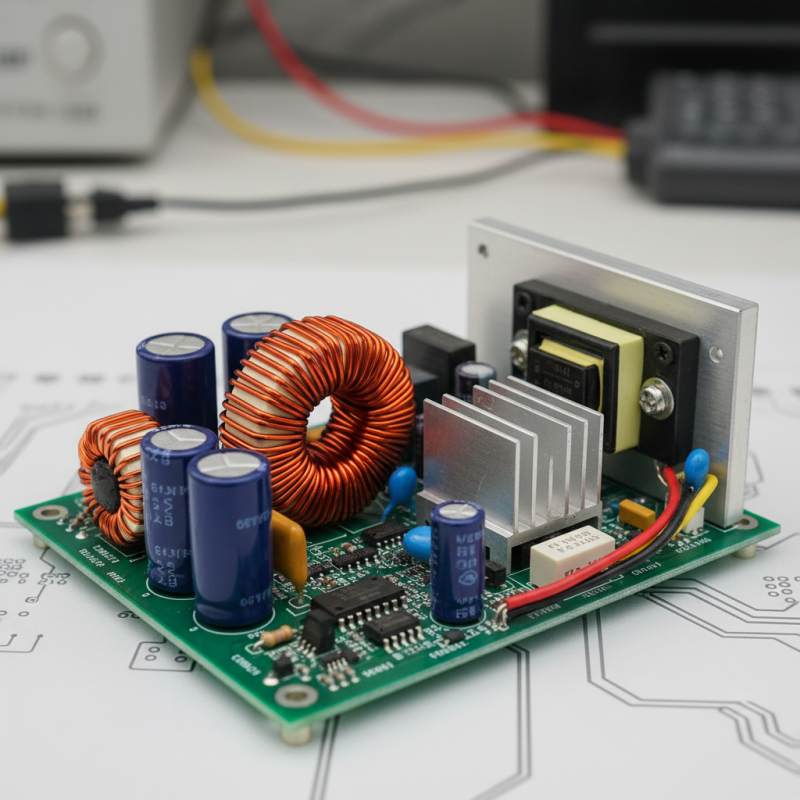
What is a Switching Power Supply and How Does It Work?
A Switching Power Supply is increasingly important in modern electronics. It efficiently converts electrical power with minimal loss. Unlike traditional power supplies, it uses techniques like pulse width modulation to improve performance.
These devices find applications in various sectors, including computers, chargers, and even industrial equipment. Their compact design makes them preferable, especially in tight spaces. However, some might struggle with electromagnetic interference.
As technology advances, understanding how a Switching Power Supply works becomes critical. It brings efficiency but requires careful design to avoid drawbacks. The balance between performance and stability is essential for optimal use.
What is a Switching Power Supply?
A switching power supply (SPS) is a vital component in modern electronics. It converts electrical power efficiently, offering several advantages over traditional linear power supplies. An SPS uses high-frequency switching to regulate voltage and current. This method results in less wasted heat and improved efficiency. According to industry reports, SPS can achieve efficiency rates exceeding 90%. This efficiency is crucial for battery-powered devices, where conserving energy matters.
The design of switching power supplies often includes complex circuitry. This can be both a strength and a weakness. While SPS can handle varying load conditions, their design can lead to electromagnetic interference. Studies show that around 30% of electronic failures are linked to poor power supply design. Striking a balance between efficiency and stability is key in this technology. Many engineers find themselves grappling with optimizing both aspects.
Despite their advantages, not all applications benefit from switching power supplies. Some sensitive devices may require linear supplies for minimal noise. The choice of power supply type is not always straightforward. In practice, it requires a deep understanding of the specific use case and potential trade-offs. Each application's unique demands will dictate the best choice for power supply.
What is a Switching Power Supply and How Does It Work?
| Parameter | Description | Typical Value |
| Input Voltage | The voltage supplied to the power supply from the mains | 85-265V AC |
| Output Voltage | The voltage that the power supply provides to the load | 12V, 24V, 48V DC |
| Efficiency | The ratio of output power to input power, expressed as a percentage | 80-95% |
| Ripple Voltage | The variation in output voltage with respect to time, caused by switching action | 50-100mV |
| Frequency | The switching frequency of the power supply | 30kHz - 500kHz |
| Operating Temperature | The temperature range in which the power supply can operate effectively | -20°C to 70°C |
| Form Factor | The physical shape and size of the power supply | Open frame, enclosed, DIN rail |
The Basic Components of a Switching Power Supply
A switching power supply is made up of several key components. The input section usually includes a rectifier. This converts AC voltage into DC voltage. Capacitors might smooth out any fluctuations. A transformer follows to adjust the voltage levels. This part is crucial for maintaining power efficiency.
Next, the switching element plays a vital role. This component rapidly turns on and off, controlling the amount of energy transferred. A common choice is a transistor. The output section includes more filtering elements, such as inductors and capacitors. These help filter out unwanted noise. Poor filtering can lead to inefficient operation.
Feedback systems are essential too. They monitor the output voltage and send signals back to the control circuit. Sometimes, these systems can be too sensitive. A tiny voltage change can lead to large corrections. This could cause instability. Balancing sensitivity is a challenge in design. Overall, while the components seem straightforward, achieving the right balance can be complex.
How Switching Power Supplies Convert Voltage
Switching power supplies are vital in modern electronics. They convert voltage efficiently, enhancing device performance. The conversion process begins with an input voltage. This voltage passes through a transformer and an oscillator. These components work together to create high-frequency pulses.
Next, the transformer steps up or steps down the voltage. It uses magnetic fields to transfer energy. This method is more efficient than linear power supplies. However, the design can get complicated. Components must be carefully selected to avoid excessive heat generation.
After voltage adjustment, the output stage smooths the pulsating voltage. Capacitors and inductors filter the signal. This step is crucial for creating a stable output. Not every design achieves perfection; some systems may struggle with noise. Continuous improvement in designs is needed to enhance efficiency and reliability.
The Advantages of Using Switching Power Supplies
Switching power supplies have gained popularity due to their many benefits. One major advantage is their efficiency. They convert electrical power with minimal energy loss. This means less heat generation, which is crucial for high-performance electronics. The compact design also leads to lighter devices, making them easier to transport.
Another important aspect is their adaptability. Switching power supplies can handle a range of input voltages. They can also adjust output power to meet varying loads. This flexibility is vital in today’s tech environment. Products require different power levels based on usage. The ability to switch efficiently allows devices to perform optimally.
However, it's essential to consider potential drawbacks. Noise interference may occur due to rapid switching. This could affect sensitive electronics. Additionally, the design process can be complex, requiring precise calculations and components. Designers must weigh those challenges against the benefits of a switching power supply. Balancing the pros and cons remains key to making informed choices in electrical design.
Advantages of Switching Power Supplies
Common Applications of Switching Power Supplies
Switching power supplies (SPS) are pivotal in modern electronics. They efficiently convert electrical energy with minimal loss. Common applications of SPS include consumer electronics, industrial equipment, and renewable energy systems. For instance, nearly 80% of all consumer electronic devices utilize SPS due to their lightweight and compact nature.
In the telecommunications sector, SPS are crucial. They ensure stable power delivery for servers and networking devices. Reports suggest that the demand for SPS in this sector is expected to grow at a CAGR of 5.2% by 2027. This growth aligns with wider digitization trends globally.
Tips: Always consider the efficiency rating of your SPS. High efficiency means less heat and longer lifespan.
Another area where SPS shine is in electric vehicles (EVs). Their ability to handle high voltage and current levels makes them suitable for battery management systems. However, the design complexity of SPS can lead to issues like electromagnetic interference (EMI). This often requires additional filtering components that complicate the circuit.
Tips: Simplifying your SPS design can mitigate potential EMI issues. Always test early and often in your design process.
 Skip to content