Skip to content

Reducing greenhouse gas emissions is no longer a distant environmental ambition. It is a practical challenge for governments, companies, and households. Every decision matters, from replacing coal power with renewables to improving insulation in an older building. The scale can feel overwhelming. Yet measurable progress often begins with ordinary changes, such as lower energy waste, cleaner transport, and carefully managed supply chains.
Climate scientist Jim Skea, Chair of the Intergovernmental Panel on Climate Change, has warned: “The choices we implement in the next few years will play a critical role in securing a liveable and sustainable future for all.” His statement reflects the urgency behind this guide. The next decade will shape infrastructure, investment, and industrial habits for generations. Reliable action requires more than attractive promises. It requires emissions data, transparent targets, independent verification, and regular public reporting.
This overview presents ten practical strategies for reducing greenhouse gas emissions across energy, buildings, transport, agriculture, industry, and consumption. Some measures are expensive at the beginning. Others produce savings quickly, such as efficient lighting, improved maintenance, and reduced fuel use. Results will differ between regions. A rural community cannot copy a dense city perfectly, and one company’s solution may create new problems elsewhere. That limitation deserves attention. Progress is not always smooth. Still, clear priorities can turn climate goals into visible work: a cleaner power grid, a quieter electric bus, a factory using less heat, and a building wasting less energy.
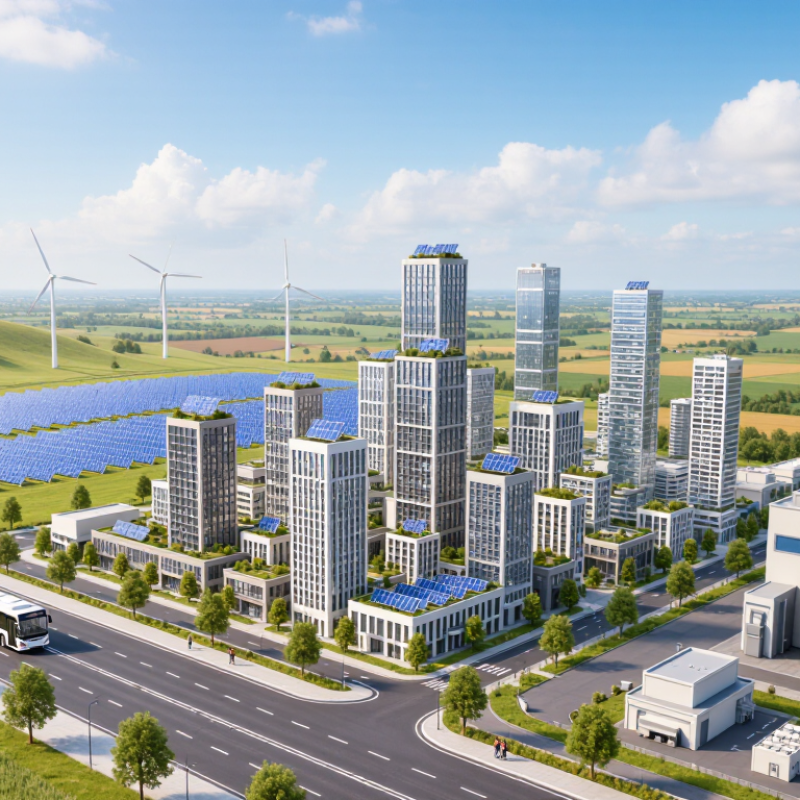
Top 10 Strategies for Reducing Greenhouse Gas Emissions
Understanding the Main Sources of Greenhouse Gas Emissions
Greenhouse gas reduction begins with identifying where emissions actually come from. Carbon dioxide mainly comes from burning coal, oil, and gas for electricity, heating, transport, and industry. Methane often escapes from livestock, landfills, and natural gas systems. Nitrous oxide is strongly linked to fertilized soil and agricultural production.
Electricity use is a practical starting point. Replacing inefficient lighting, improving insulation, and using low-carbon power can reduce emissions from buildings. Transport requires several approaches, including reliable public transit, efficient vehicles, walking, and shorter supply routes. In factories, emissions may come from fuel combustion and chemical reactions, so cleaner energy alone may not solve the problem.
Food and land use deserve careful attention. Livestock digestion produces methane, while overused fertilizer increases nitrous oxide emissions. Protecting forests also matters because damaged soils and trees release stored carbon. Waste creates methane when organic materials decompose without oxygen. Separating food scraps and capturing landfill gas can help.
Measurement remains difficult. A company may report factory emissions while overlooking suppliers, shipping, or employee travel. That gap can make progress look better than it is. Practical audits should examine fuel bills, energy meters, production records, and land-use changes. Targets should be checked against actual emissions, not hopeful estimates. Small errors matter. Yet waiting for perfect data can delay useful action.
| No. | Reduction Strategy | Main Emissions Source Addressed | Practical Measures | Relevant Facts and Indicators | Priority |
|---|---|---|---|---|---|
| 1 | Expand Renewable Electricity | Electricity and heat generation | Replace unabated coal and gas generation with wind, solar, hydropower, geothermal energy, and other low-carbon sources. Improve grid flexibility through storage, transmission, and demand management. | Energy supply was responsible for approximately 34% of global greenhouse gas emissions in 2019. Decarbonizing electricity also lowers emissions from electric vehicles, buildings, and industry. | Now–2030 |
| 2 | Improve Energy Efficiency | Buildings, industry, transport, and energy conversion | Use efficient appliances, motors, lighting, industrial equipment, insulation, heat recovery, and energy-management systems. Apply strong building energy codes to new construction. | Efficiency improvements reduce both energy demand and operating costs. Buildings and construction account for a significant share of global energy use and energy-related emissions. | Immediate |
| 3 | Electrify Transport and Expand Public Mobility | Road, rail, aviation, and shipping transport | Adopt electric cars, buses, and rail where suitable; improve public transport, walking, cycling, and urban planning; use low-carbon fuels for transport modes that are difficult to electrify. | Transport contributed approximately 15% of global greenhouse gas emissions in 2019. Electric vehicles generally have lower life-cycle emissions than comparable combustion vehicles when charged with increasingly clean electricity. | Now–2035 |
| 4 | Reduce Methane Leakage | Oil and gas production, coal mining, landfills, and agriculture | Detect and repair leaks, eliminate routine venting and flaring, capture landfill gas, improve manure management, and apply feed and farm practices that reduce livestock methane. | Methane is a powerful short-lived greenhouse gas. The United Nations Environment Programme estimates that around 45% of human-caused methane emissions can be reduced with measures available today. | Immediate |
| 5 | Decarbonize Heavy Industry | Steel, cement, chemicals, and other industrial processes | Use material efficiency, recycling, electrification, low-carbon hydrogen, alternative fuels, clinker substitution in cement, and carbon capture for residual process emissions where appropriate. | Industry produced approximately 24% of global greenhouse gas emissions in 2019. Cement also creates process emissions when limestone is chemically converted into clinker. | Now–2040 |
| 6 | Protect and Restore Natural Carbon Sinks | Deforestation, land-use change, and ecosystem degradation | Stop deforestation, restore forests and wetlands, protect peatlands and mangroves, improve soil management, and strengthen monitoring against land degradation. | Agriculture, forestry, and other land use accounted for approximately 22% of global greenhouse gas emissions in 2019. Natural sinks are vulnerable to fire, drought, warming, and land-use change. | Immediate |
| 7 | Adopt Climate-Smart Agriculture | Livestock, fertilizers, rice cultivation, and agricultural soils | Improve fertilizer timing and application, use precision agriculture, manage livestock feed and manure, reduce rice-field methane, and increase soil carbon through appropriate conservation practices. | Agricultural emissions include methane and nitrous oxide, which are substantially more potent than carbon dioxide over a 100-year assessment period. | Now–2030 |
| 8 | Reduce Food Loss, Waste, and High-Emission Diets | Food production, land use, refrigeration, and waste disposal | Improve storage and supply chains, prevent avoidable food waste, use food-waste separation and composting, and encourage balanced diets with more plant-based foods where culturally and nutritionally appropriate. | The United Nations Environment Programme reports that food loss and waste generate approximately 8–10% of global greenhouse gas emissions. | Immediate |
| 9 | Build Efficient, Low-Carbon Buildings | Heating, cooling, water heating, and construction materials | Upgrade insulation and windows, use efficient heat pumps, design for passive heating and cooling, reduce refrigerant leakage, and select lower-carbon construction materials. | Buildings directly accounted for approximately 5.6% of global greenhouse gas emissions in 2019, while energy used in buildings is also reflected in electricity and heat-generation emissions. | Now–2030 |
| 10 | Use Circular Economy and Material Efficiency | Mining, manufacturing, construction, and waste management | Design products for durability, repair, reuse, remanufacturing, and recycling; reduce material demand; increase recycled content; and prevent organic waste from entering unmanaged landfills. | Material production is responsible for substantial energy use and emissions. Circular approaches reduce demand for virgin materials and can lower emissions across industrial supply chains. | Immediate |